The Hidden Harm of ‘Brother’s Keeper’ at Hyde School, by Britt DiGiacomo published by Hearst Media, appeared in print in The Norwalk Hour 8/3/25.

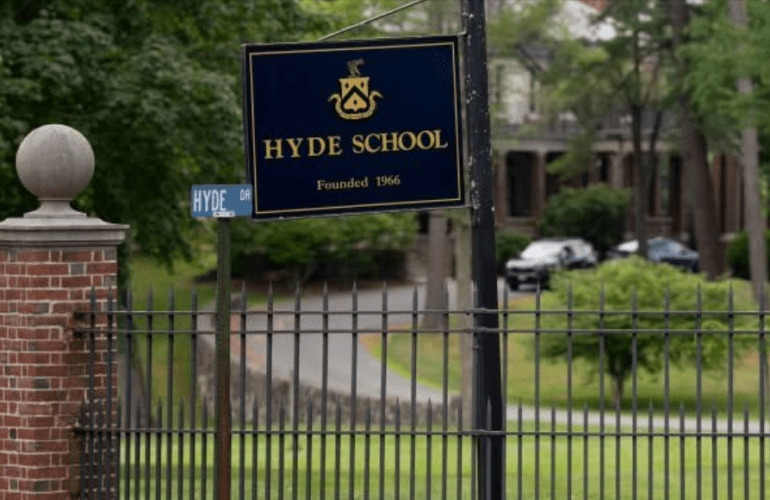
This summer, Hyde Boarding School in Bath, Maine was hit with a federal class-action lawsuit, one that echoes what many of us have known for years.

The suit, Fuller v. Hyde School, alleges forced child labor, emotional abuse, and coercive practices masked as “character development.” Since its filing, dozens of alumni have come forward with similar stories. I’m one of them.

I attended Hyde School’s Woodstock, Connecticut campus for three and a half years. While parts of the experience, particularly family therapy, brought growth, one aspect of Hyde’s culture never left me: the brutal enforcement of “Brother’s Keeper.”

On the surface, Brother’s Keeper sounds like integrity, students holding each other accountable. But in practice, it created a hierarchy of informants and interrogators. The system rewarded betrayal, punished privacy, and manufactured fear.

Here’s how it worked: one student breaks a rule. Another reports them. Then the Dean’s Area begins its sweep. Students are pulled into rooms and pressured to confess, name names, expose anyone else who might be “dirty.”

This wasn’t accountability. It was emotional warfare.

Sometimes it ended in full “school busts,” ritualistic spectacles where students were called on stage and forced to confess humiliating details, often about sex or drugs, in front of the entire school body. Later, the Dean would probe deeper in private, asking graphic, invasive questions under the guise of “support.”

If your name came up, your parents were called immediately. You were labeled untrustworthy. Not ready. A failure. And if you didn’t “come clean” fast enough, you were manipulated into believing you were hiding something. That you were sick. That you weren’t safe to be let out into the world.

Some students were held back a year, despite passing grades and completed credits, because Hyde didn’t believe they were “ready.” Anywhere else, they would have graduated. At Hyde, they lost a year of their lives, and their families lost another year of tuition, all because they broke a rule and failed to confess soon enough.

At Hyde, you weren’t measured by your growth, your grades, or your honesty over time. You were measured by your submission.

If you protected a friend, you were dishonest. If you kept something private, you were manipulative. If you didn’t collapse and rebuild yourself publicly, you weren’t ready.

The culture didn’t just fracture friendships. It severed our sense of self. It taught us that loyalty to the institution mattered more than loyalty to ourselves. That humiliation was a necessary step toward redemption. That our mistakes were more defining than our progress.

I remember gripping my seat during a senior-year bust while a girl on stage sobbed through a confession that never should have been public. I stared at the floor, praying I wouldn’t be next.

I was terrified. Afraid of what my family would think. That everything I had done to change, to earn back their trust, would be erased. I was terrified they’d believe Hyde over me. That they’d see me as a failure again. That they wouldn’t let me come back home.

What Hyde called “character” was just control.

Hyde didn’t break me. If anything, it made me tougher, but at a cost. I didn’t leave feeling weak or insecure. I left guarded. Wary. I learned to flinch before trusting, to scan for danger before connection. I see the bad in people before I see the good. And it takes time, sometimes too long, to believe someone is safe. To believe that I am.

Since I started speaking out, I’ve heard from dozens of alumni with similar stories, many just beginning to untangle what happened to them.

I’ve spent the last decade writing a novel about my experiences at Hyde, titled The Pace of Nature. It’s currently in submission for publication. The story explores how I ended up at Hyde, what happened there, and the long road to reclaiming my identity. Starting this month, I’ll be sharing updates as the journey unfolds.

To Hyde, I say this: the world doesn’t need more control dressed as character. It needs healing. Accountability. And the kind of strength that doesn’t rely on fear.

The Space Between Me and Yellow

There’s this fire in my belly

Restless, tying my hair in braids 
I don’t have everything 
figured out, but I’m getting 
good at removing expectations

like
picking up a pencil 
without checking to see
if it was sharpened first  

and trying my best 
to be clear because
people can’t read 
my mind 

in modern, published by Women Around Town on 6/28/20

I’m scrolling through stories on social
because 
to engage with influencers 
will give me a chance

I’m scrolling and looking
and the thought of expressing myself

in 140 characters or less 
is simply overwhelming

I use my thumb to double click 
and as I like a post, I see 
my nails are bitten down
and stubby 

MY LOVE, Published by “Women Around Town” 2/14/19

Look at me
look passed my eyes
and listen 
 
I do not love you because I have to
or because I fear being alone 
or because time moving forward means
having to settle for the things you need
 
I am not a broken heart 
but I get cold when standing under a tree 
with the sun on the other side of the world
though, I still crave the deep shades of night 
the silence of the sky

Jupiter in Taurus, Published by “Boulder Weekly” 8/3/18

I press the snooze button on my alarm
three times and then 
finally wake up happy 
 
I step in to the outfit 
already laid out, place my foot 
in a shoe that didn’t cost 
too much, 
 
I sit on the couch drinking coffee
a stain appears on my shirt
I glance out the window – no rain
 
I scrub the stain out, 
eat the leftovers, 
eye old memories hanging 
like art on my fridge 
my phone is fully charged 

Monday Night Yoga, Published by “Women Around Town” 6/3/18

I’m flat on my back
my heels spread as wide as the mat
my fingers stretch like star shapes

my palms face up because I’m
trying to be open and at peace
I’m trying to welcome news things
like change and balance

but the man next to me is sleeping
through his shavasana and snoring
so loud I can’t count my breaths
or empty my mind or be grateful

I turn to him and whisper be here now
but he is somewhere else
and now I roam

Sunny Friday at 4:00 pm, Published April by “FishFood Magazine” 4/30/18

A lung has escaped my body.
I’d been walking down the street when
it emerged right out of my chest.
The left one. Not the right – the smaller one that keeps room for my heart.
It’s no longer in me but out. 
 
Not at all fleshy or muscular, but more 
like something boiled for far too long.
Painfully hot;
liquid lung trickling down my leg, 
swelling over the edge of my sneaker,
splatting like blob on the sidewalk.   

STEFAN, Published by “Red Fez Magazine” 2/13/18

I was twelve when I learned the truth about my father. I’d always wondered about him. Ever since I could talk, I asked my mother about him. Who was he? Where was he? Did he know about me? She would spark a cigarette and puff on it a minute before responding. And then, when she finally did, her answers were always different. He died in the war. He was lost at sea. Sometimes she’d ignore me, walk into her bedroom and lock herself inside. When I was eight, for an entire year she had me convinced the mailman from Cheers, Cliff Claven, was my dad. And when I found the nerve to ask her more about him, she switched the story up, telling me my dad was a spaceman, and then weeks later a pirate. She never repeated the same story twice. 

For years, I never understood why my mother made up stories about my dad. It was as if she wanted me to know there was something more to it than whatever lie she mustered up. It was why, I was sure, she left the picture and court papers in her sock drawer. She knew I’d find them. And when I did, I knew her and I could never have an honest conversation about who my father was. 

I became angry. I acted out. Fights at school, drugs and all that. I hated myself. I hated her. Even though it wasn’t her fault. It was him I wanted to hurt. But I couldn’t stop thinking about what my mother thought of me. When she looked at me, did she see him?